Introduction: Why Lighting Matters in a Yoga Studio
Lighting is an important part of the yoga experience. A well-designed yoga studio should feel comfortable, peaceful, and welcoming from the moment students walk through the door. The lighting should help people concentrate on their movements, follow the instructor, and relax without unnecessary glare or harsh shadows.
However, choosing lights for a yoga studio is not simply about making the room look beautiful. The lighting must also support different activities, from energetic Vinyasa sessions to slow Yin yoga, meditation, stretching, and relaxation.
Too much brightness can make a room feel clinical. Lighting that is too dim may make it difficult for students to follow poses safely. Poorly positioned fixtures can create glare when students look upward or lie on their backs.
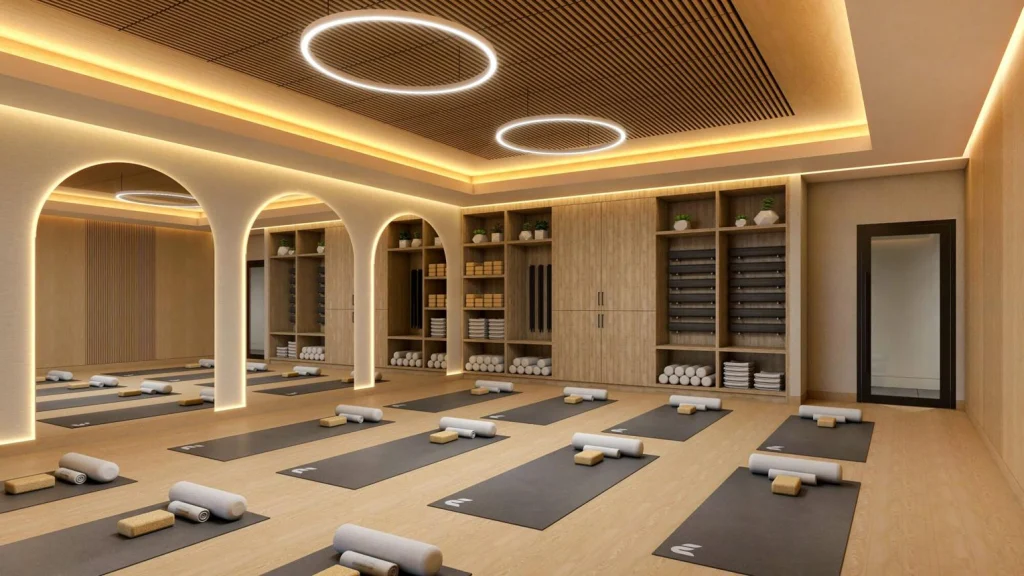
The best approach is to combine practical general lighting with softer, indirect lighting and adjustable controls. LED ceiling lights, concealed LED strip lights, wall lighting, and dimmable fixtures can work together to create a flexible environment.
This guide explains what to consider when choosing yoga studio lighting, which LED lighting options are worth considering, and how to create a comfortable atmosphere without compromising visibility.
Understand the Different Lighting Needs of Your Yoga Studio
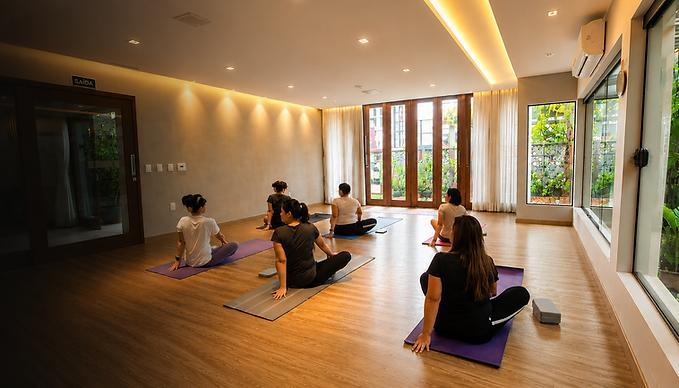
Before choosing a fixture, consider the size of the studio, ceiling height, class types, wall colors, flooring, and the amount of natural daylight. A small private studio may need a different setup from a large commercial space with several classes each day.
A practical lighting plan usually includes three layers.
- General lighting: Provides enough illumination for students to see their surroundings, follow instructions, and move safely.
- Indirect lighting: Creates a softer atmosphere through concealed ceiling coves, wall recesses, or reflected light.
- Accent lighting: Highlights architectural features, reception desks, shelves, or a studio logo.
These layers should work together rather than compete with each other. For example, a yoga room can use functional ceiling lights during active classes and dimmable cove lighting during meditation.
When planning a new studio, consider the entire space, including the entrance, changing rooms, corridors, and areas where students store their belongings. Consistent lighting helps the studio feel welcoming from beginning to end.
Choose the Right Color Temperature
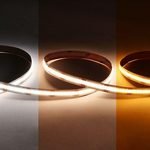
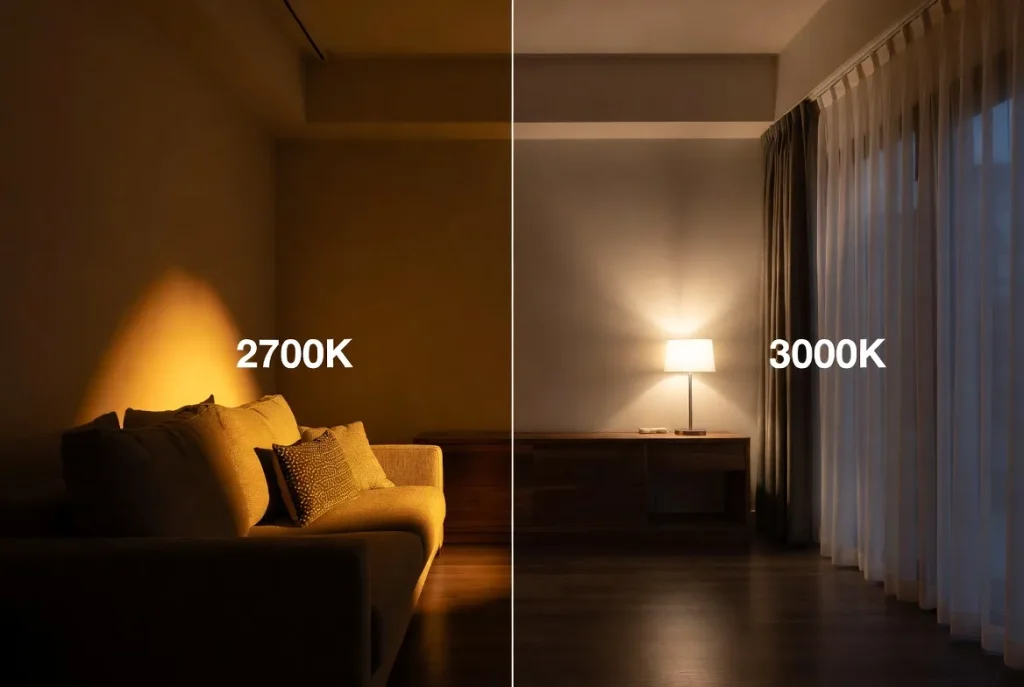
Color temperature is measured in Kelvin (K). It influences whether a light appears warm and golden or neutral and white.
For most yoga studios, warm white and neutral white are useful starting points. The final choice depends on the style of classes, the interior design, and how clearly instructors need students to see their movements.
| Color temperature | Appearance | Suitable applications |
|---|---|---|
| 2200K–2700K | Very warm, candle-like | Meditation, relaxation, Savasana |
| 2700K–3000K | Warm white | Restorative yoga, Yin yoga, evening classes |
| 3500K–4000K | Neutral white | General studio lighting, mixed class formats |
| 4000K–5000K | Cooler, crisp white | Active movement areas where clear visibility is important |
These are starting points rather than strict rules. A studio does not need to use a single color temperature throughout the building.
My recommendation: Consider 3000K for the main ambient lighting and dimmable 3500K–4000K lighting for functional areas. If the studio offers several class styles, tunable-white lighting can provide greater flexibility.
Avoid choosing very cool white light for the entire room simply because it appears brighter. A balanced lighting design can provide good visibility without making a relaxing space feel like an office.
For a seamless architectural appearance, explore COB LED strip lighting. Its continuous line of light can work well in concealed ceiling coves and other indirect lighting installations.
Calculate Brightness and Maintain Comfortable Visibility
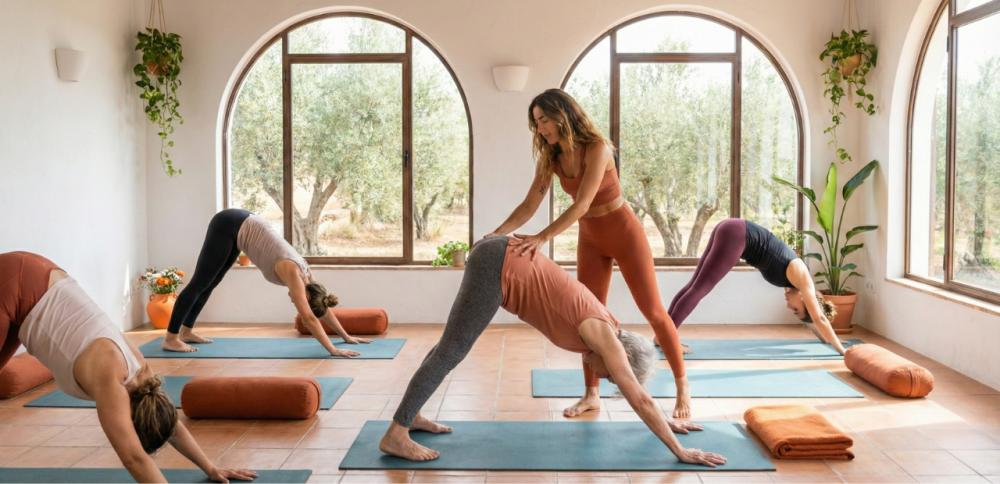
Brightness is another important factor when choosing lights for a yoga studio. The goal is to provide enough illumination for students to move confidently while avoiding harsh light that distracts from the practice.
Two terms are particularly useful:
- Lumens: The total amount of visible light emitted by a light source.
- Lux: The amount of light reaching a surface. One lux equals one lumen per square meter.
For preliminary planning, you might evaluate around 150–300 lux for a general yoga practice area, with higher levels where instructors demonstrate movements or where detailed tasks are performed. Relaxation sessions may use lower levels, provided students can still move safely.
These figures are starting points, not universal standards. Final illuminance should be determined from the studio layout, the applicable local requirements, and the needs of the people using the space.
Also consider how evenly light is distributed. A room with bright spots directly below fixtures and dark areas between mats can be less comfortable than a room with a more uniform light level.
Before purchasing fixtures, ask the supplier for lumen output, beam angle, dimming compatibility, and photometric information where available. For a larger studio, a lighting simulation can help identify dark areas and glare before installation.
Calculate Brightness and Maintain Comfortable Visibility
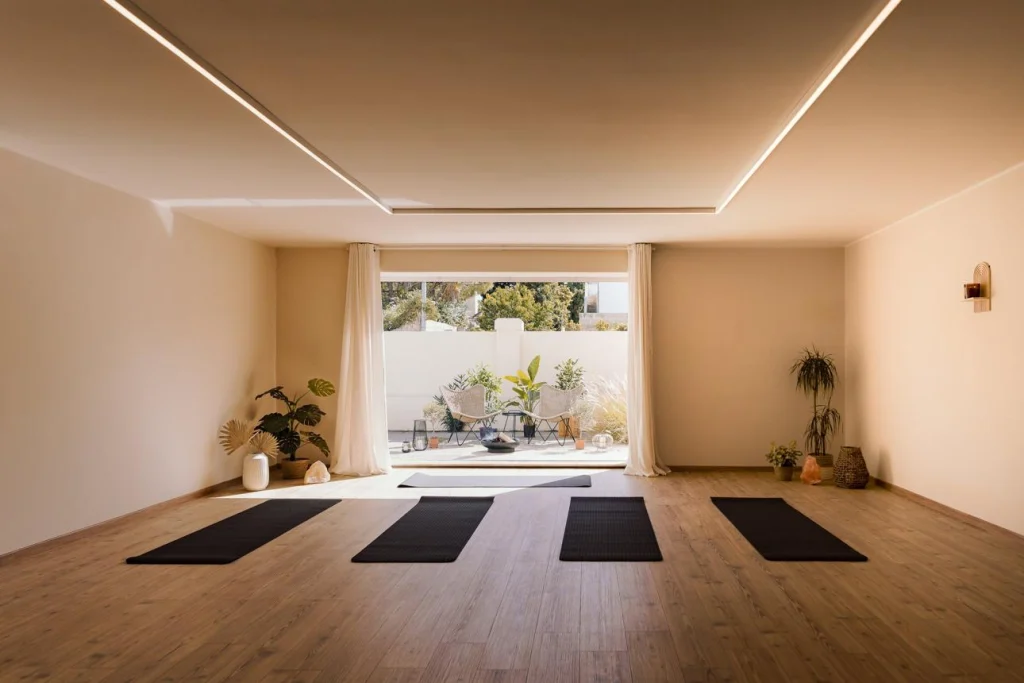
LED strip lights are particularly useful when you want the room to feel calm without relying entirely on direct ceiling lighting.
Instead of exposing the light source, installers can place LED strips inside ceiling coves, behind wall features, beneath built-in benches, or along selected architectural edges. The light reflects off nearby surfaces, creating a softer appearance.
Here are three options worth considering.
COB LED strip lights
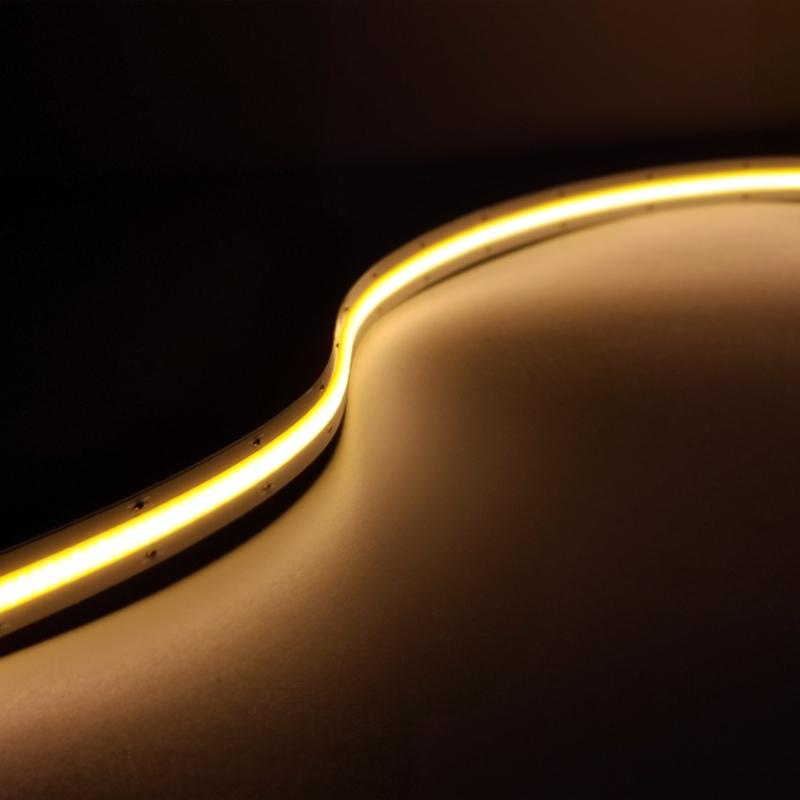
COB strips produce a smooth, continuous line of light with minimal visible LED dots. They are a strong option for ceiling coves, recessed details, and clean contemporary interiors.
Product guide: COB LED strip lights
LED strips inside aluminum profiles
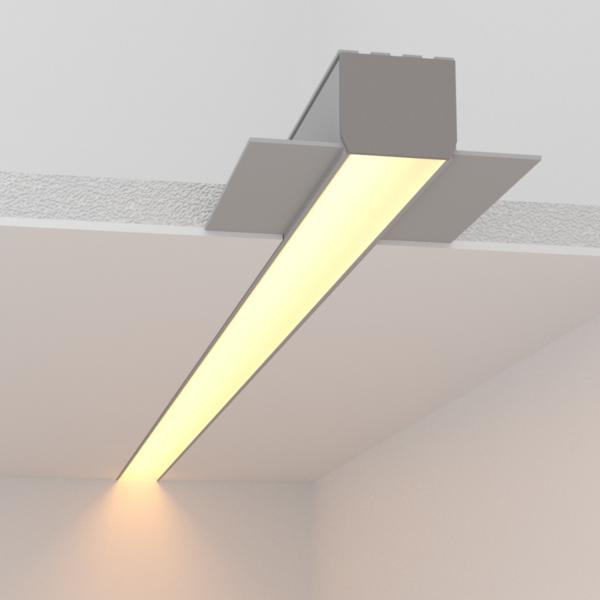
An aluminum profile provides a mounting channel, helps dissipate heat, and can protect the strip. An appropriate diffuser helps soften the light and create a neat, finished installation.
Product guide: LED aluminum profiles
Flexible LED strip lighting
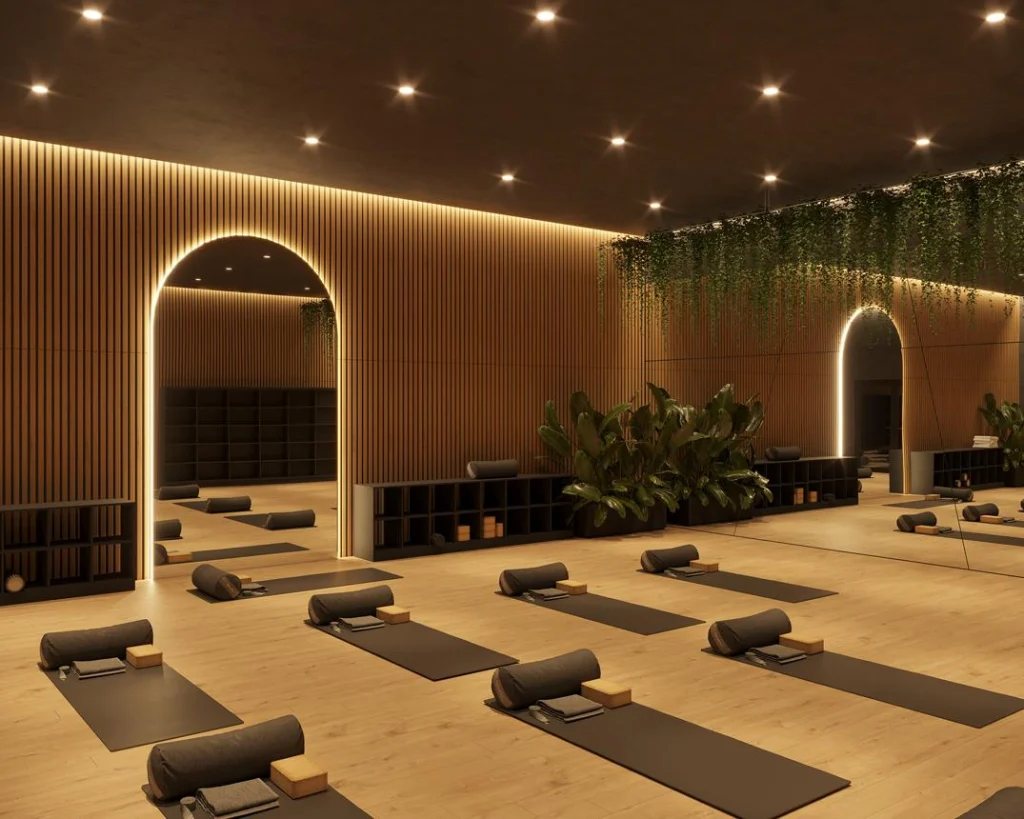
Flexible strips can follow straight edges, curved features, and custom architectural details. They are useful for accent lighting around wall panels, reception counters, and selected display areas.
Explore: MSHLED LED strip light products
For most yoga studios, warm white or high-quality tunable-white strips are more useful for everyday lighting than decorative color effects. Choose a suitable brightness level and make sure the strips are compatible with the intended dimmer.
One important installation detail: even dotless COB strips can appear too bright if viewed directly. Hide the strip where possible, position it to illuminate a surface, and test the effect from a student’s position on the mat.
Select High-Quality LED Lights With Good Color Rendering
Color rendering describes how naturally a light source reveals the colors of objects. It is measured using the Color Rendering Index (CRI), with higher values generally indicating more faithful color appearance.
For a yoga studio, consider these specifications:
- CRI 90 or higher: A useful target for natural-looking skin tones, yoga mats, wooden floors, and interior finishes.
- Low flicker: Look for reliable LED drivers and documented flicker performance, particularly when lights will be dimmed or used during long sessions.
- Low glare: Choose suitable optics, diffusers, and fixture positions to reduce direct brightness in students’ fields of view.
- Stable color quality: Select products with consistent color temperature across fixtures so the room does not appear patchy or uneven.
- Reliable dimming: Check that the LED driver and controller are compatible across the full intended dimming range.
CRI is useful, but it is not the only measure of lighting quality. Two products with the same CRI can still look different, so samples and on-site testing are worthwhile.
You can review COB LED strip options when comparing smooth light output, color temperature, and installation requirements.
Make Dimming a Priority for Different Yoga Classes
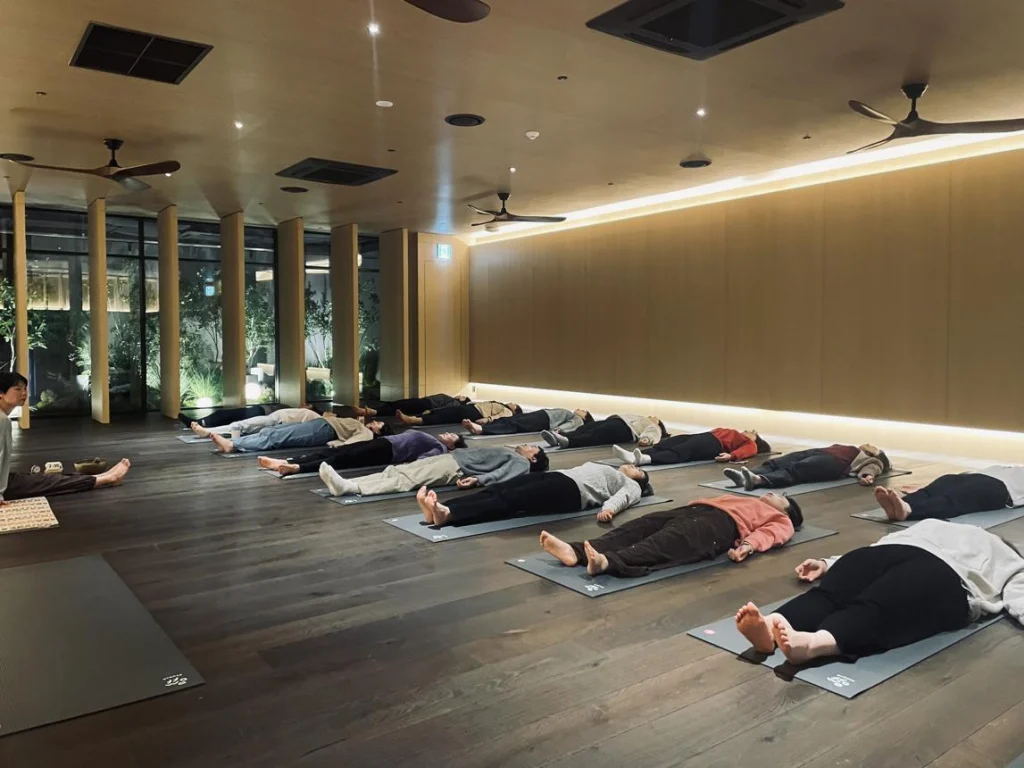
A studio that offers several types of yoga should not have to rely on one fixed brightness level. Dimming allows the same room to support active movement, stretching, breathing exercises, and relaxation.
A practical lighting control plan could include the following scenes.
| Lighting scene | Suggested approach |
|---|---|
| Morning or active yoga | Moderate to bright, comfortable neutral white |
| General group classes | Balanced, even illumination |
| Yin or restorative yoga | Warm, dimmed indirect lighting |
| Meditation and Savasana | Low-level warm ambient light, with safe visibility maintained |
| Cleaning and maintenance | Bright, even functional lighting |
For more control, consider separate circuits or zones for ceiling lights, cove strips, and accent lighting. This allows the instructor to adjust the atmosphere without making the whole room too dark.
Before specifying a dimmer, verify that the LED driver supports the chosen control method, whether that is a compatible wall dimmer, a remote controller, or a smart lighting system.
RGB or RGBW LED strips can also provide occasional themed lighting, but use them selectively. If color-changing light is important to the studio concept, choose a system that can return easily to comfortable white light. Ordinary RGB color mixing should not be assumed to provide the same white-light quality as a dedicated white LED channel.
For more background, see the RGB, RGBW, and RGBIC LED strip comparison.
Choose Suitable Lighting for Hot Yoga and Humid Environments
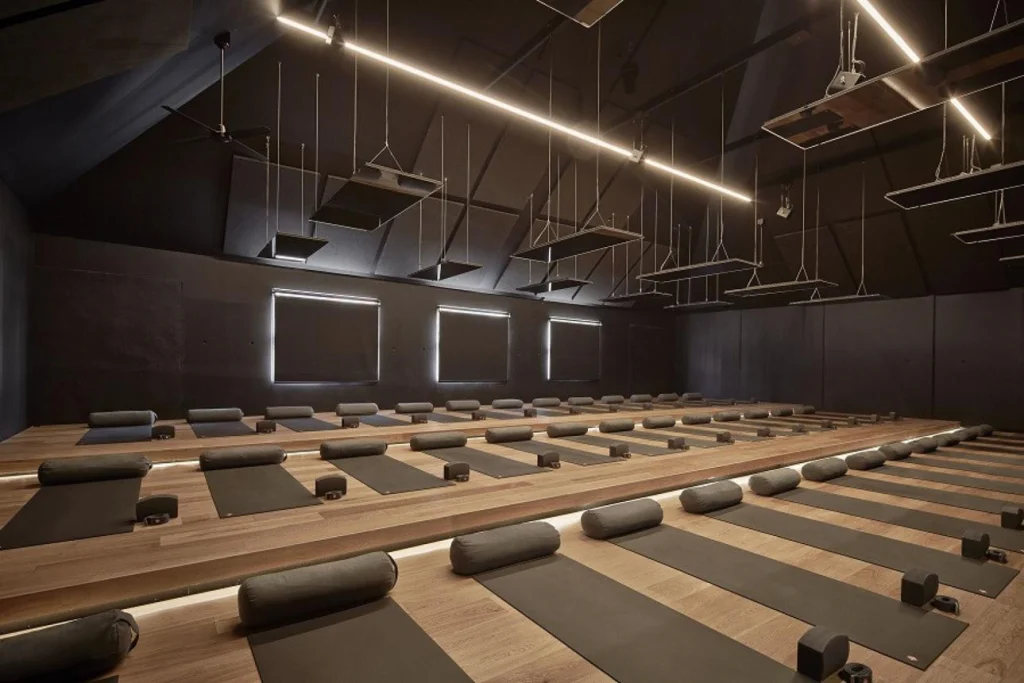
Hot yoga studios have different environmental requirements from ordinary yoga rooms. Elevated temperatures, humidity, and perspiration can affect lighting equipment, electrical connections, and the long-term reliability of the installation.
When choosing lighting for a hot yoga room, pay attention to the following details.
- Temperature rating: Check the LED strip, driver, and control equipment against the actual operating temperature of the installation location.
- Moisture protection: Select an appropriate IP rating based on the exposure to humidity, condensation, and cleaning water. An IP rating alone does not guarantee suitability for high temperatures.
- Heat management: Install LED strips in suitable channels and ensure the driver has adequate ventilation and operates within its specified temperature range.
- Electrical safety: Use appropriately rated equipment and have the installation completed in accordance with applicable electrical regulations.
- Maintenance access: Place drivers and connections where they can be inspected and serviced without dismantling major parts of the room.
For hot yoga, do not assume that every waterproof LED strip is suitable. Some sealed products retain heat more readily, and their rated operating conditions may not match the environment inside a heated studio.
The best solution is to confirm the actual ambient temperature, surface temperature, humidity exposure, and product specifications before making a final selection.
Plan the Lighting Layout to Avoid Glare and Dark Areas
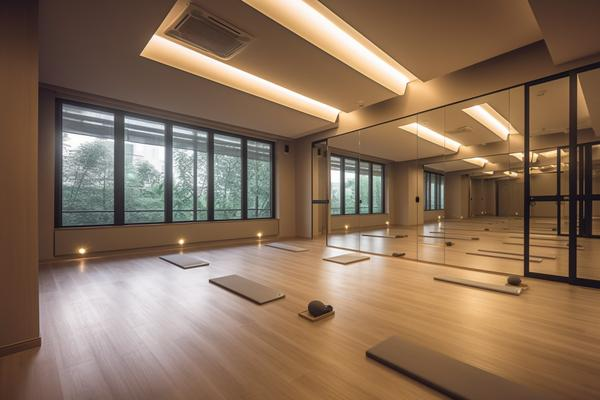
Even good LED products can produce poor results when installed in the wrong positions. The lighting layout should consider the direction students face, the ceiling height, mirrors, windows, and the location of the instructor.
Use these practical guidelines when planning the installation:
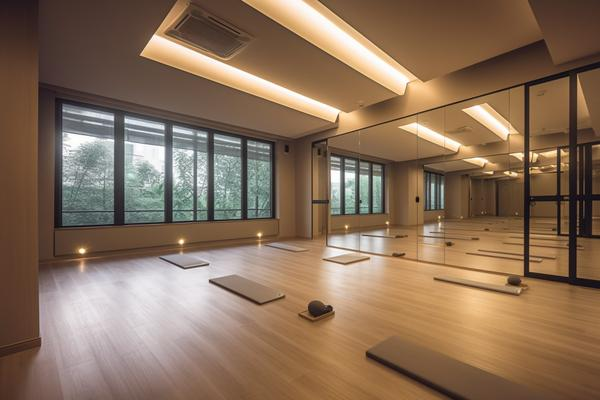
- Avoid harsh light directly above the face. Students often look upward or lie on their backs during yoga. Recessed, shielded, or indirect lighting can improve comfort.
- Distribute light evenly. Avoid bright pools of light separated by dark areas, especially across the main practice floor.
- Use mirrors carefully. Position fixtures to reduce reflected glare in mirrors and other glossy surfaces.
- Keep the central practice area uncluttered. Use concealed ceiling or perimeter lighting where appropriate instead of relying on decorative floor lamps.
- Consider daylight. Window light can improve the atmosphere, but blinds or curtains may be necessary to manage glare and changing daylight levels.
- Plan wiring and controls early. Decide where drivers, dimmers, and access points will be located before ceilings and wall panels are finished.
For a neat architectural installation, LED aluminum profiles can help conceal strip lights, manage heat, and provide a finished linear appearance.
Before completing the project, test the lights from several positions: standing, sitting, and lying on a yoga mat. This simple step can reveal glare and shadows that may not be obvious when inspecting the room from the entrance.
Consider Energy Efficiency, Lifespan, and Maintenance
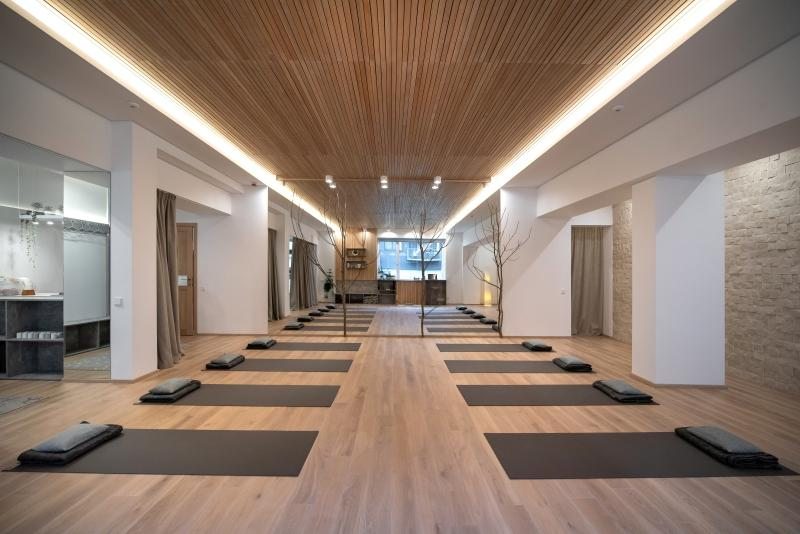
Yoga studio lighting is often used for several hours a day, so energy consumption and maintenance costs matter alongside the initial purchase price.
When comparing LED products, look beyond the advertised wattage. Check the actual light output, efficacy in lumens per watt, expected operating life, warranty terms, and compatibility with the lighting controls.
A few practical considerations can help reduce ongoing costs:
- Use efficient LED fixtures that provide the required illumination without excessive power consumption.
- Divide the lighting into zones so unused areas do not need to remain fully illuminated.
- Use dimming to adjust output when full brightness is unnecessary.
- Keep diffusers and accessible fixtures clean to maintain light output.
- Choose reliable drivers and make sure replacement components are available.
- Confirm that concealed strip lighting can be accessed for repairs without major renovation.
For strip lights, aluminum profiles can help manage heat, while the correct power supply and installation method are important for reliability. Long LED runs may also need careful voltage-drop planning to maintain consistent brightness.
Read the COB LED strip installation guide before specifying strips for a permanent architectural project.
The lowest initial price is not always the most economical option. A lighting system that is easy to control, maintain, and repair can be a better long-term investment for a busy studio.
Common Yoga Studio Lighting Mistakes to Avoid
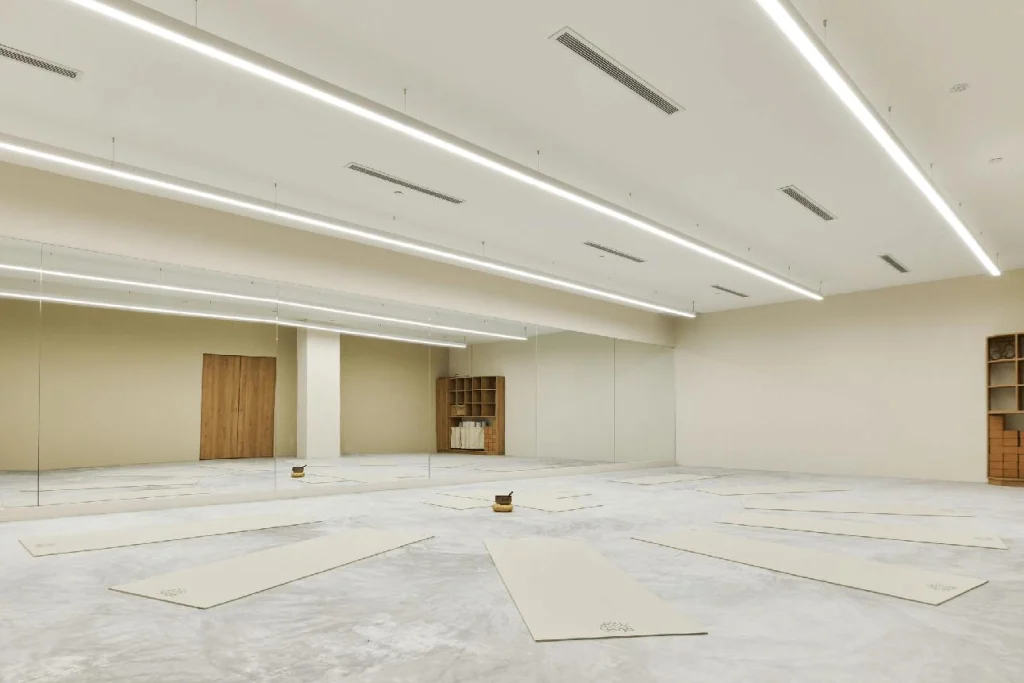
When designing yoga studio lighting, avoid these common mistakes.
Using only warm decorative lighting. Warm light looks relaxing, but the room may not have enough illumination for active poses, cleaning, or instruction. Combine ambient lighting with suitable functional lighting.
Making the room too dim. Meditation may benefit from low light, but students still need to move safely and see their surroundings. Keep a suitable minimum level of illumination.
Choosing fixtures based only on wattage. Wattage measures electrical power consumption, not the amount of light reaching the floor. Compare lumens, distribution, and the overall lighting layout.
Installing exposed LED strips in the line of sight. Directly visible LEDs can be distracting. Consider concealed mounting, COB strips, or suitable diffusers.
Using color-changing effects throughout every class. Saturated colors may suit special sessions, but they are not a substitute for high-quality white lighting. Make comfortable white light readily available.
Ignoring compatibility between strips and dimmers. An incompatible combination may flicker, buzz, or fail to dim smoothly. Test the complete system before installation.
Overlooking the environment in hot yoga rooms. Temperature and moisture requirements must be considered for the strip, driver, connectors, and other electrical components.
Failing to test a sample. Before ordering lighting for a large studio, test a sample in the actual space. Check its appearance, brightness, color consistency, glare, and dimming performance.
A successful design is not necessarily the one with the most fixtures. It is the one that provides the right light, in the right place, at the right time.
Yoga Studio Lighting Selection Checklist
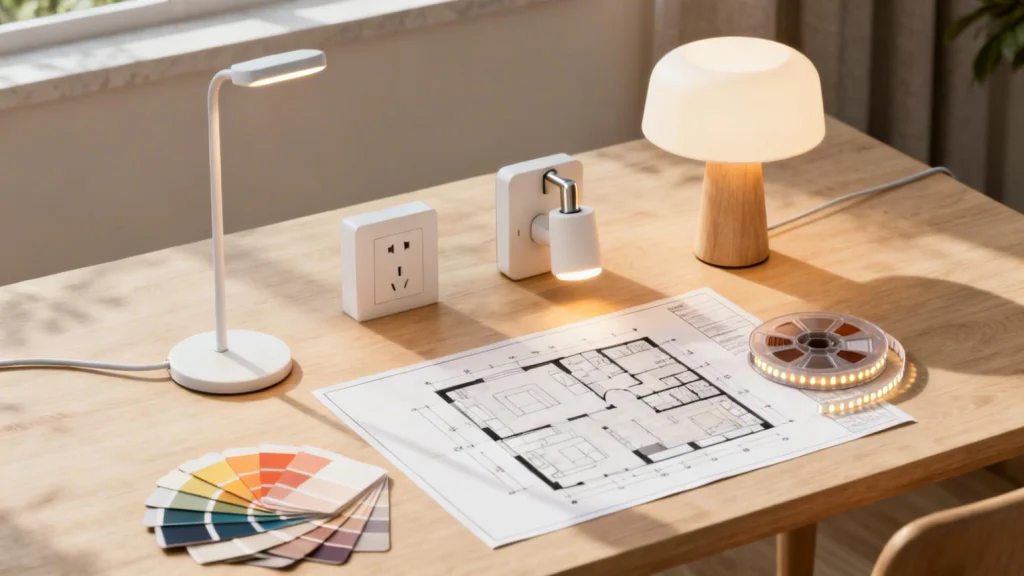
Use this checklist when comparing products or discussing specifications with an LED lighting supplier.
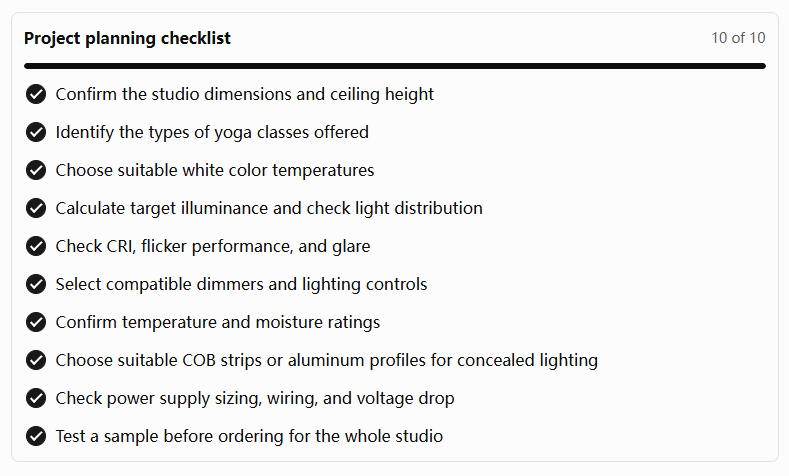
This checklist is useful for both new studio construction and renovation projects. For a large commercial space, consider involving a lighting designer or qualified electrical professional before finalizing the specification.
Frequently Asked Questions About Yoga Studio Lighting
What is the best lighting for a yoga studio?
A combination of evenly distributed general lighting, dimmable fixtures, and indirect ambient lighting is a good starting point. Warm white or neutral white LEDs can suit most studios, depending on the type of classes and the desired atmosphere.
What color temperature is best for yoga?
Around 2700K–3000K is a useful choice for relaxation and restorative yoga. Around 3500K–4000K can be suitable for general practice areas that need a balanced appearance and clear visibility. Dimmable tunable-white systems offer more flexibility.
Are LED strip lights suitable for yoga studios?
Yes. LED strip lights are useful for concealed ceiling coves, wall features, reception areas, and other architectural details. COB strips are particularly helpful when a smooth line of light is desired.
Are COB LED strips better than regular LED strips?
COB strips generally produce a more continuous line of light with fewer visible dots. They are often preferable for exposed or shallow architectural installations, although brightness, CRI, heat management, and the quality of the finished installation still matter.
Should yoga studio lights be dimmable?
Yes, dimming is highly beneficial when a studio offers different class styles. It allows instructors to adjust the atmosphere for active practice, stretching, meditation, and relaxation. Make sure the LEDs, drivers, and controls are compatible.
How bright should a yoga studio be?
For initial planning, approximately 150–300 lux can be considered for a general practice area, with adjustments based on class type and visibility requirements. The appropriate final level depends on the layout, local requirements, and whether the room is used for active exercise or relaxation.
Is RGB lighting a good choice for yoga studios?
RGB lighting can add color for themed sessions or special experiences. However, a high-quality white lighting system should remain the foundation. If both functions are important, consider RGBW or another system with a dedicated white-light channel.
Can LED strip lights be used in hot yoga rooms?
Potentially, but only when the complete installation is suitable for the actual operating temperature and moisture exposure. Check the ratings for the LED strip, driver, connectors, and control equipment rather than relying on the strip’s IP rating alone.
How can I prevent glare in a yoga studio?
Use indirect lighting, suitable diffusers, shielded fixtures, and careful positioning. Test the room from the perspective of someone lying on a mat, because a fixture that looks comfortable from the entrance may be uncomfortable when viewed upward.
What should I check before buying LED strip lights for a yoga studio?
Check color temperature, lumens per meter, CRI, dimming compatibility, power consumption, voltage, IP rating where needed, operating temperature, installation accessories, and warranty. Also confirm the strip width and power requirements match the intended aluminum profile and installation layout.
Conclusion: Create a Comfortable and Flexible Yoga Studio
Choosing the right lighting for a yoga studio means balancing visibility, comfort, flexibility, and the overall atmosphere. The most effective design usually combines practical general lighting with warm indirect lighting and controls that can adapt to different classes.
For many studios, dimmable white LED fixtures and concealed COB LED strips are a sensible starting point. Aluminum profiles can help create clean architectural details, while carefully selected RGBW lighting can provide optional color effects without replacing the main white lighting system.
The most important step is to plan the lighting around the actual space and the way people use it. Check brightness, glare, color quality, temperature ratings, and control compatibility before committing to a full installation.
If you are planning a yoga studio lighting project, explore MSHLED LED strip lighting products and LED aluminum profiles to compare options for your design.